
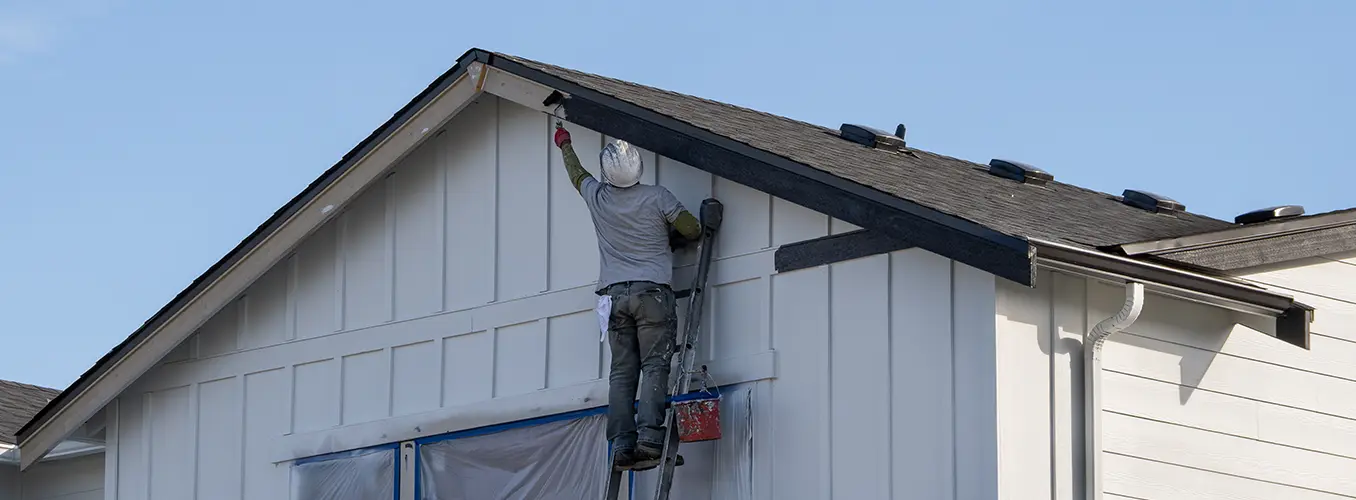
Professional Exterior Painting Services Available in Belleville, IL
Exterior Painting Services in Belleville, IL
Southern Illinois is hard on the outside of a house. Humid summers, sudden storms, and a winter of freeze-thaw cycling that works water into every seam and then expands it. An exterior painting job here isn’t decoration — it’s the layer keeping weather out of your siding and trim.
Which is why the most common mistake in exterior painting is skipping the cleaning. Paint applied over dirt, chalk, or mildew doesn’t bond to the house. It bonds to the contamination, and then it comes off with it.
Wuebbels Painting Contractor has been exterior painting in Belleville since 1964. Licensed, insured, family-owned, and here next year if you need us.
What we paint outside
- Siding — wood, vinyl, aluminum, and fiber cement
- Brick and masonry
- Trim, doors, windows, and shutters
- Decks, porches, and fences
- Gutters and downspouts
- Exterior staining
- Pressure washing
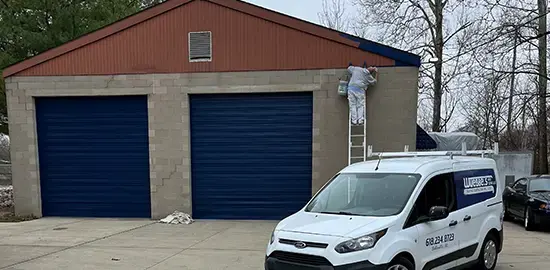
- Commercial and new construction exteriors
How we prepare an exterior
We evaluate the whole surface first — what’s failing, why it’s failing, and what has to happen before anything gets coated.
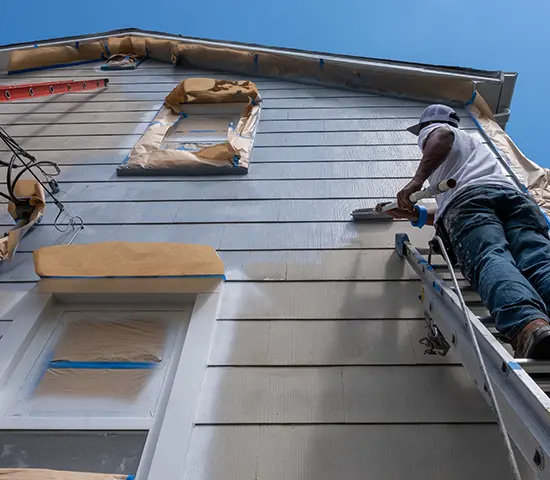
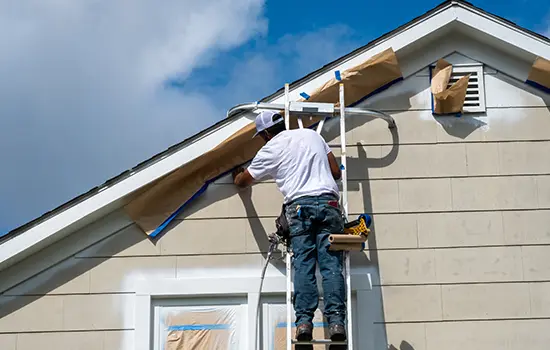
Then, depending on what we find: scraping and sanding loose paint, power washing where the surface can take it, spot priming with a stain-blocking primer anywhere the substrate is exposed or discolored, and caulking to seal the gaps around windows, doors, and trim joints where moisture and insects get in.
We use brushes, rollers, and sprayers depending on the surface, and we cut carefully around windows, doors, and trim.
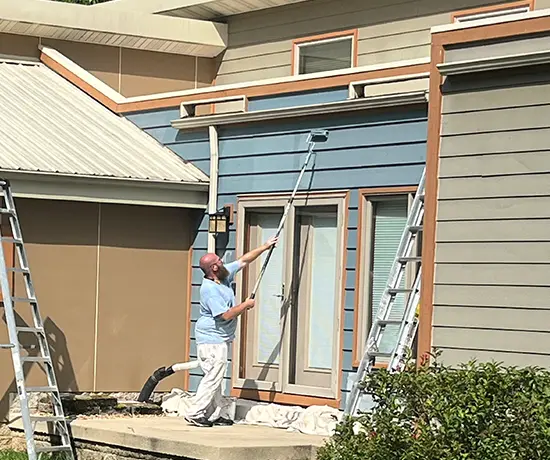
Vinyl and aluminum siding
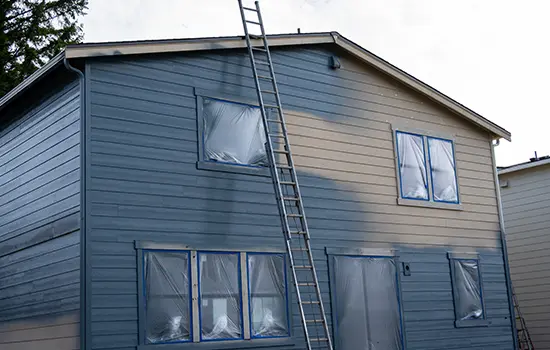
The vinyl rule most homeowners have never heard: you generally cannot paint vinyl siding a darker color than it already is.
Vinyl expands and contracts with temperature. Dark colors absorb significantly more solar heat, and a dark coating on vinyl can cause the siding to warp, buckle, and permanently distort. Paint won’t undo that, and it typically voids the siding manufacturer’s warranty. Paint manufacturers created vinyl-safe color lines engineered to reflect enough heat to stay inside the siding’s tolerance.
Aluminum siding has a different problem. As it ages, aluminum oxidizes and develops a chalky surface layer — wipe it with a dark cloth and you’ll see it come off. Paint over chalk fails, often within a season. It has to be washed off completely, then primed with a bonding primer, then finished. Done right, aluminum siding takes paint extremely well.
When we’d say don’t. If siding is cracked, brittle, warping, or coming loose, painting it is money spent on a surface that has to come off anyway. We’ll tell you if that’s what we’re looking at.
Brick and masonry
Belleville is a brick town, and this is the service where the honest answer is most often “think carefully first.”
Painting brick is close to permanent. Once it’s coated, going back is expensive, risky, and sometimes impossible without damaging the face of the brick. Any contractor who takes this job without making sure you understand that isn’t doing you a favor.
Brick needs to breathe. Brick and mortar are porous by design — they absorb moisture and release it. A coating that seals the surface tight traps that moisture inside the wall. Then winter arrives, the trapped water freezes and expands, and it pushes the face off the brick. That’s spalling, and it’s structural damage, not a cosmetic problem.
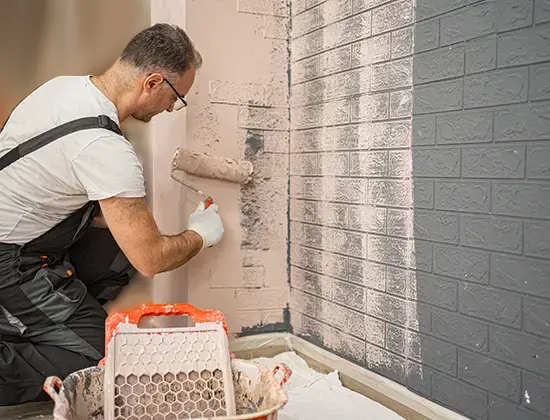
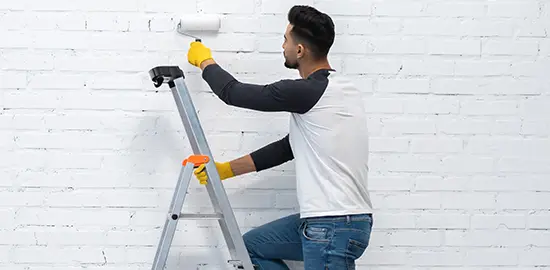
So the coating system matters far more than the color. A vapor-permeable system lets the wall dry. A sealing film doesn’t. This is especially true of older masonry — the soft-fired brick and lime mortar in Belleville’s historic homes behaves completely differently from modern brick and portland mortar, and it’s much less forgiving of both trapped moisture and aggressive cleaning.
If your home is in one of Belleville’s historic districts, exterior changes may be subject to review — worth a call to the city before you commit.
Decks, fences, and exterior staining
Two questions every deck owner has, answered straight.
“Why did my last stain job only last a year?” Usually moisture. Wood has to be dry before it takes stain — genuinely dry, verified, not assumed. Here’s the test you can do yourself: sprinkle water on the boards. If it beads and sits, the wood isn’t ready. If it soaks in within seconds, it is. New pressure-treated lumber can need months before it will accept a penetrating stain, and a contractor who stains a deck the week it’s built is selling you a job you’ll be redoing.
The other reason is that deck floors are simply the hardest surface on your property. Summer UV and heat, thunderstorm soakings, then freeze-thaw all winter driving water into the grain and working the finish loose from underneath. It’s why your rails still look fine while the floor boards are failing. Vertical surfaces hold a finish far longer than anything you walk on.
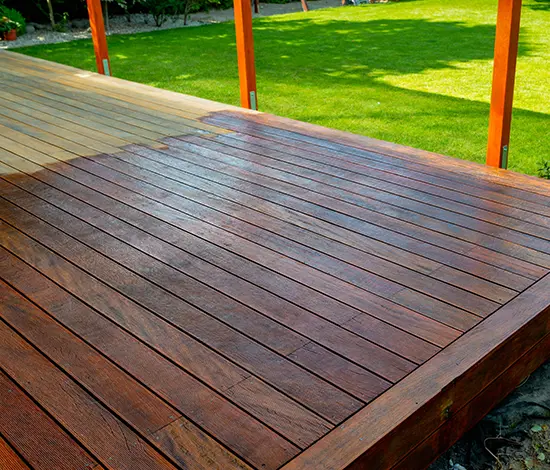
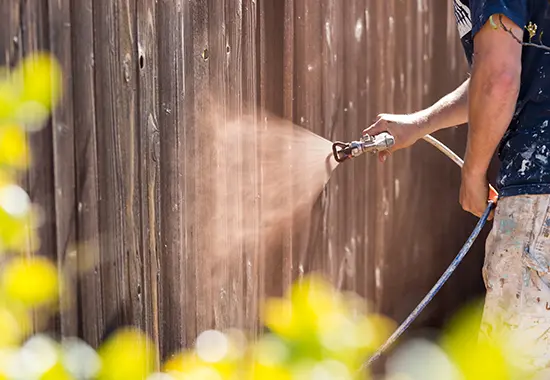
“Should this be a stain or a solid color?” On a fence or a railing, solid color stain is a perfectly good choice. On a deck walking surface, we’ll steer you away from it. Solid stain forms a film, and a film on a horizontal surface that gets standing water and foot traffic will peel. Once it peels, the only way back is stripping or sanding the whole deck. We recommend semi-transparent or semi-solid on deck floors, and we’ll explain the tradeoff rather than just taking the order.
Cleaning matters as much as the stain. A lot of outfits blast a deck with a pressure washer and stain it the same day. We clean with the appropriate wood cleaner, brighten to restore the wood’s pH, and let it dry properly before anything else happens. Regular light maintenance recoats are dramatically cheaper than a strip-and-restart every eight years.
Pressure washing
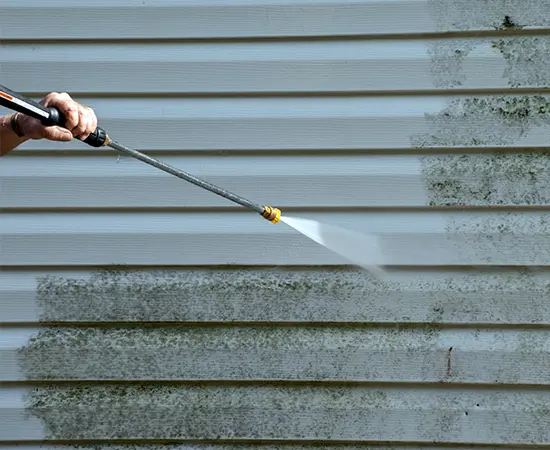
We wash exteriors as paint prep. The advantage of hiring painters to do it is that we know what has to bond to the surface afterward — and we know what pressure does to a substrate.
Pressure washing damage is real and usually invisible at first. Too much pressure furs wood, drives water behind siding, blows out mortar joints, etches concrete, and forces water past window seals. It often doesn’t show up for months.
Soft washing is the right answer more often than people think. It uses a cleaning solution and low pressure to kill and release organic growth — the correct approach for vinyl and aluminum siding, painted surfaces, and most roofs. The distinction matters: high pressure blasts the growth off the surface, soft washing actually kills the organism, so it stays gone considerably longer.
Trim, doors, shutters, and gutters
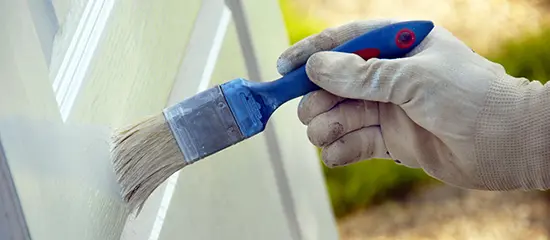
The details are what make an exterior read as maintained rather than merely painted. We handle trim, fascia, soffits, doors, window frames, shutters, and gutters and downspouts, with the same prep standard as the siding — scraped, sanded, primed where needed, and caulked at the joints.
Weather, scheduling, and why exterior work moves
Exterior painting is weather-dependent, and southern Illinois summers regularly push outside the window where paint will properly cure. Applying in the wrong temperature or humidity — or ahead of rain that arrives sooner than forecast — produces a finish that looks fine on day one and fails early.
When weather forces a delay, we tell you and reschedule. We’d rather move a day than hand you a job that has to be redone in two years. Before we start, we’ll walk you through the expected timeline based on the size and condition of the project.
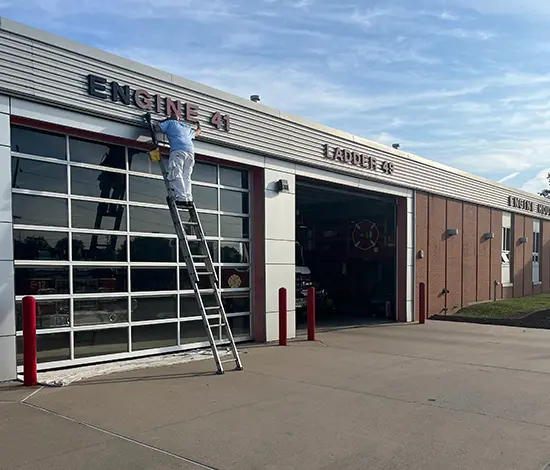
Frequently Asked Questions About Exterior Painting
How long does exterior paint last around here?
It depends heavily on substrate, exposure, and the quality of the prep. South and west elevations take the most UV and always weather first.
When is the best time of year to paint an exterior in Belleville?
Late spring through early fall gives the most workable days, but the specific window depends on temperature and humidity, not the calendar. We schedule around conditions.
Do you paint fiber cement and previously painted wood siding?
Yes. Both take paint well when properly prepared.
Can you power wash my house before painting?
Where the surface can take it, yes.
Ready for an estimate? Expert quotes on exterior painting throughout Belleville and surrounding communities. Call (618) 779-4347 or request one online.